TSSAA approves implementation of basketball shot clock
MATT TYSON Staff Writer

A shot clock will officially be coming to Tennessee high school basketball in the not-too-distant future.

The Tennessee Secondary School Athletic Association Board of Control approved the phased implementation of a shot clock Tuesday during its two-day summer meeting in Mt. Juliet earlier this week. The board voted 8-4 to approve the addition.

The 35-second shot clock’s rollout will begin in the 2026-27 school year, with teams being permitted to use it in Hall of Champions games, holiday tournaments and summer competitions starting this upcoming season. After three seasons to phase it in, full implementation for the regular season and postseason is scheduled to begin during the 2029-30 season.

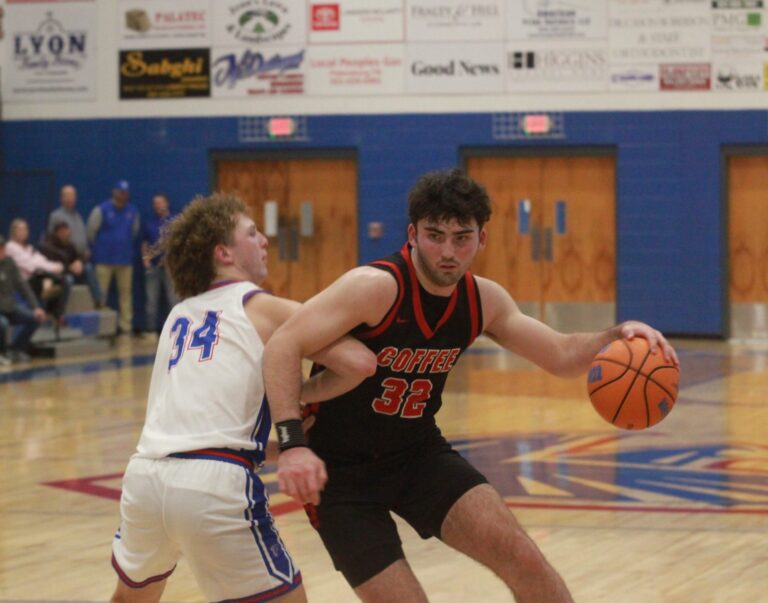
“From a playing standpoint, I feel like most high school possessions don’t last 35 seconds, so I think typically, from the playing side of things, it’s going to impact end of quarters and end of games the most. A team gets up by eight points with three minutes to go, they can’t just stall the ball. They’re gonna have to get up a shot,” Coffee County boys’ basketball coach Andrew Taylor said of the decision’s impact. “On the economic side of things, it’s gonna put everybody in a situation obviously where you’re gonna have to have two play clocks. I don’t know if you’re gonna be required to have a third play clock in case one of them malfunctions, or somebody at the table will keep it on a stopwatch if one of them goes bad. Now we’re having to pay an extra person at the table, so there’s gonna be an economic impact to it.”

More specifically for the Red Raiders, Taylor added that it more than likely would not change too much of Coffee County’s approach to games moving forward, outside of end of game and end of quarter situations. Despite adding a limit on the length of possessions, Taylor expected the Red Raiders’ slower pace of play to remain largely intact.

“For us, in 4A basketball, the faster the pace, the better it is for the bigger, faster, stronger and deeper teams. We’ll probably play similar to how we’re playing now. In other words, if we have that early shot, we’ll take it. If not, we’re gonna probably be in lengthier possessions than a lot of people,” Taylor said. “So for us, it’s gonna be a matter of implementing. You have to have quick-hitting plays for end of shot clock situations, so when you do run that clock down and now there’s only eight seconds to go before you have to get up a shot, you’re gonna have to have, from a strategy standpoint, some quick-hitting plays, which for most people turn into some kind of ball screen action, getting the ball to a guy and coming up, getting him a ball screen and letting him go to work. We’ll still probably on average have a slower pace of play than a lot of people, just because year in, year out in 4A basketball, we’re not always the biggest, the fastest or the strongest. There’s times where we play defense with our offense, so it’ll impact that to a certain degree. But with it being 35 seconds, it still, I think, is gonna have a limited impact honestly, until you get late-game situations.”

On the girls’ side, Lady Raider head coach Joe Pat Cope said he was looking forward to seeing the shot clock implemented and was hoping to start using it during this season’s competitions where it will be allowed.

“I think it’s a needed thing. Our job is to prepare kids for the next level and it’s in college, it’s in professional basketball. I just think the pace of the game is changed so much by a shot clock and I think it’s like anything else, it’s gonna favor the teams who put in the most work,” Cope said. “This year, it can be used at Hall of Champions games and Christmas tournaments, so I would love to go ahead and get them in the gym, start training people to work that and use it in our Hall of Champions and our Dusty Elam Christmas Tournament.”

Matt Tyson
Matt Tyson
Articles: 4