Greta Brown-Hinds-Dajani balances home life while working in a man’s world
Greta Ann Brown Hinds-Dajani was born in the 9th Model Community of Coffee County, TN to Buford and Ann Brown on October 17, 1939. Greta grew up in that community, along with three brothers, Buford Jr., David and Dwight and two sisters, Karen Hinds Daniel and Cindy Hinds Anderson.

As a child, Greta had a terrible speech impediment. When she started school, the teacher at the 9th Model School had a difficult time understanding her. Her parents went to Dr. Clarence Farrar and he recommended putting Greta into the Manchester Grammar School (now College Street Elementary) where they had a Speech Therapist, Mrs. Kate Miller. The family paid to have Greta driven to and from Manchester each day. The end result was that in just a couple of years, under Mrs. Miller’s therapy, Greta’s speech impediment was gone.

Greta went on to graduate from Manchester High School (now Central High School) in 1958, and then attended the University of Tennessee in Knoxville where she graduated with a major in Home Economics and a secondary degree in Chemistry. After completing college, she went to work for the University of Tennessee in their Extension Service Program for three years.

In 1962, Greta married Doyle Hinds and they raised three children; Heather Hinds Duncan, Holly Hinds Johnson and Heath Hinds.

In January of 1965, Greta was hired by the State of Tennessee to supervise the Federal Food Stamp Program. This new position had her traveling to all 95 counties in the state, making presentations to each County Commission and Mayor to get their approval for the program in their county. Under Greta’s supervision, the Federal Food Stamp Program was accepted in all 95 Tennessee counties.

In 1975, Greta was presented with The Howard L. Russell Memorial Merit Award from the American Public Welfare Association for her leadership of the Tennessee Food Stamp Division. This award is only given every other year to just one person in the United States.

In 1978, Greta stepped down from her position with the Food Stamp Program to accept a new position with the Metropolitan Development and Housing Agency in Nashville. As General Services Director of the MDHA, Greta oversaw many projects, including a new Nashville Convention Center and the construction of Bridgestone Arena for the new Titans Football Stadium.

In 1981, Nashville Mayor Richard Fulton asked her to oversee the U. S. Surplus Food Distribution in Nashville. Trains arrived in Nashville with box cars full of cheese, butter and powered milk with no way to distribute it. Greta immediately began contacting large grocery stores like Kroger, asking them to provide refrigerated trucks to store the food. Then she worked with the Parks Department to set up distribution sites and with the help of Bill Hall, weatherman at WSMV, the word went out about the program and how to participate in it. Her attention to this program was so successful that TN Congressman Bill Boner asked Greta to go to Washington DC and testify before a congressional committee on ways to improve the program. She took her daughters with her.

H e r recommendations were to have the boxes sent out in refrigerated trucks instead of trains and to have them loaded on pallets so they could be easily off-loaded, saving time and a lot of worker’s compensation insurance claims. Both of her recommendations were implemented. Greta continued to work at the MDHA until 1999, retiring from there after twenty years of service.

Doyle Hinds passed away in 1999 after a long illness. When Greta remarried, it was to Sam Dajani, who was also widowed. She and Doyle had been friends with Sam and his wife, Carolyn, since their college days at U.T.

Greta’s retirement lasted about 7 years before Gerald Nicely, Commissioner of the Tennessee Department of Transportation called and asked her to be the Deputy Commissioner and oversee the Driver’s License Division. She was the first woman to hold that position.

Many counties didn’t have a driver’s license office and drivers had to drive up to 30 miles to get or renew their driver’s license. The goal was to upgrade some existing offices as well as add new offices across the state. She’s especially proud that the Coffee County office was one of those.

Greta also found that the computer system being used was 30 years old and needed to be updated. Greta went to Legislative Plaza and met with legislators to get the funding needed to buy new computers and have them installed. The funding was approved and when Greta retired (again), the process of getting and installing the computers was underway.

Each job Greta accepted was headquartered in Nashville, but she continued to live in Coffee County. She drove the 70 miles to and from Nashville each and every day. She knew how important it was to come home and spend time with her family. She cooked every night and the family sat down for dinner together. Greta wanted her children to experience growing up on a farm in the country, just as she had.

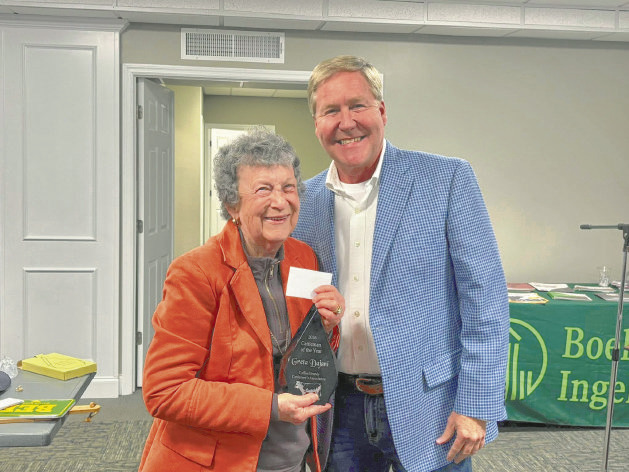
Greta Dajani has no idea what retirement looks like. She continues to run a 200 acre farm with a 100 head of beef cattle. She’s been President of the Parent/Teacher Association; she’s now serving her second term on the Coffee County Industrial Board; she’s a past President of the Coffee/Grundy County Cattlemen’s Association and, to her surprise, they recently presented her with the 2026 Cattleman of the Year Award.

Greta Brown-Hines-Dajani mastered the issue of Work-Life Balance back in a time when most men thought women should be relegated to being a wife and mother. She not only held important positions with many demands and responsibilities but she also found a way to still be a wife and mother. She’s quick to point out that the thing she’s most proud of is being a mother to her three children and MeMe to her nine grandchildren and two great-grandchildren.

Although it wasn’t always easy, Greta Dajani found a way to have it all.